
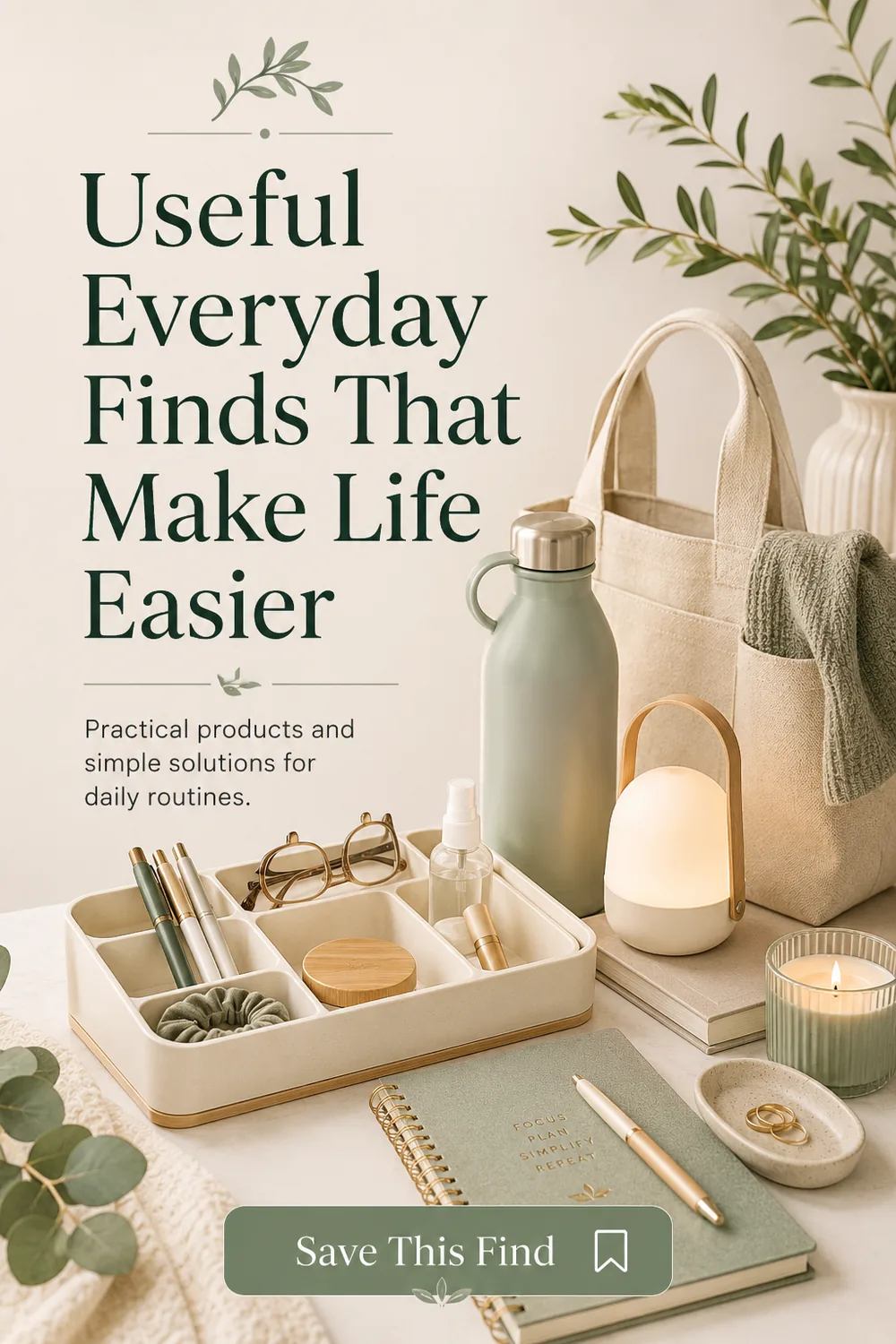
A useful everyday product should solve a repeated problem, fit naturally into the routine and be easy to store. Trendiness alone is not enough. The best finds reduce friction without creating more clutter, maintenance or unnecessary replacement costs.
Start with a repeated inconvenience
Notice problems that occur several times each week: searching for keys, carrying water, organizing charging cables or moving essentials between rooms. A product is more likely to be valuable when it addresses a real, recurring need.
Check whether it simplifies or duplicates
Before adding an item, ask whether something already owned performs the same function. A multipurpose solution may be better than another specialized product that requires its own storage space.
Consider maintenance
Useful products should be easy to clean, recharge, refill or repair. Review the effort required after purchase. A convenient-looking item can become frustrating if it depends on unusual refills or frequent replacement parts.
Think about storage before purchase
Decide where the item will live and whether it can be returned there easily. Products used daily should have an accessible location. If no reasonable storage place exists, the item may add more friction than it removes.
Prioritize durable, understandable design
Simple controls, replaceable parts and sturdy materials often support longer use. Read product information carefully and avoid relying only on a highly styled image or a short trend video.
Quick checklist
- Identify a repeated problem
- Avoid unnecessary duplication
- Review cleaning and maintenance needs
- Choose a storage location first
- Prioritize clear and durable design
A thoughtful next step
Choose one idea that addresses a real need in your current routine. Test it before adding more products or systems. The most useful solution is the one that remains easy to use after the initial motivation has passed.