
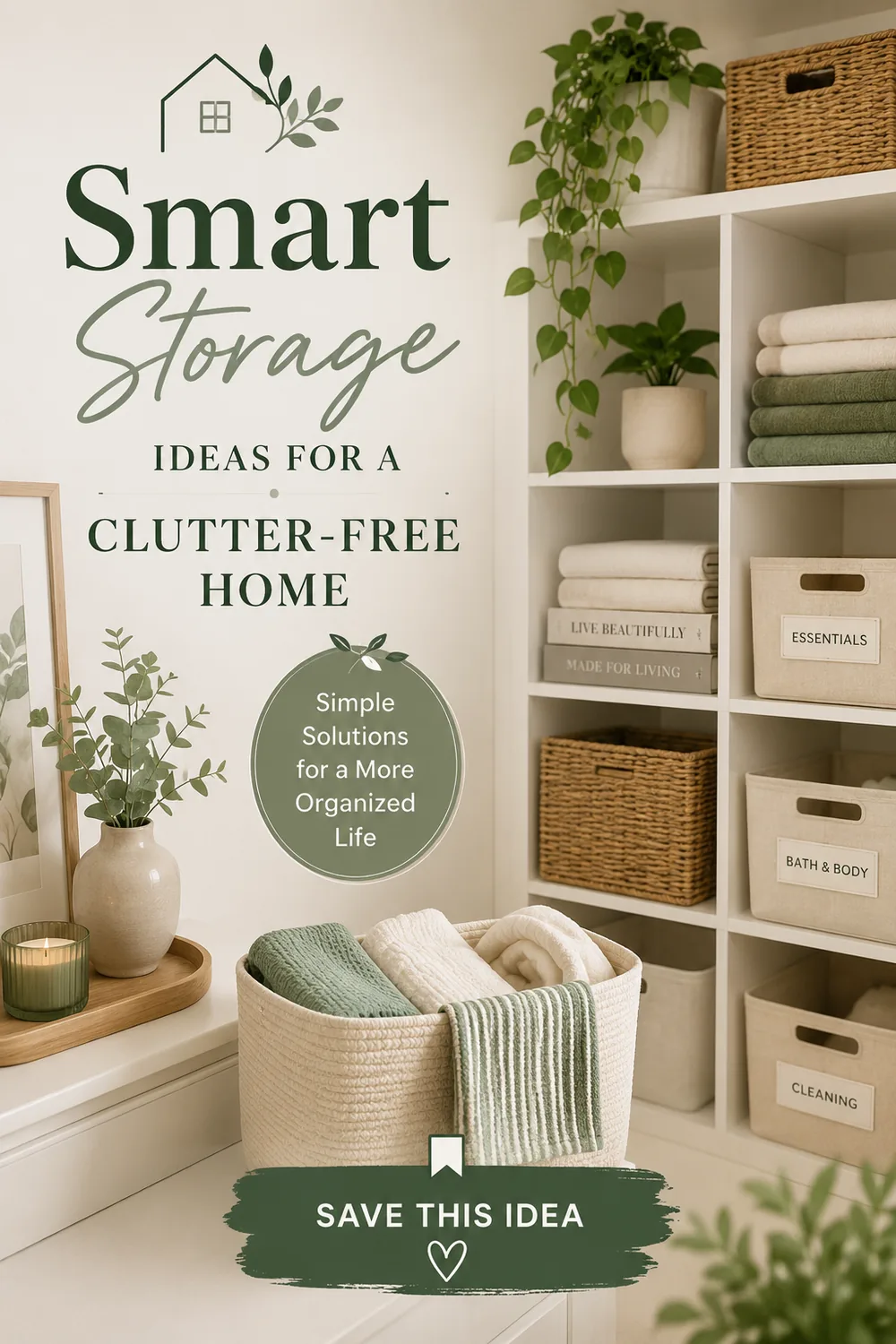
A clutter-free home is not about hiding everything or creating a picture-perfect room. It is about giving frequently used items a logical place, reducing visual noise and making daily routines easier. The most effective storage systems are simple enough to maintain even on busy days.
Start with the flow of the room
Before buying containers, notice where items naturally collect. Shoes may gather near the entryway, mail may land on a kitchen counter and towels may pile up near the bathroom. These patterns show where storage is actually needed. Place a basket, tray, hook or shelf close to the point of use so putting an item away takes only a few seconds.
Use open and closed storage intentionally
Open shelves work well for attractive, frequently used items. Closed bins are better for backup supplies, cleaning products and objects that create visual clutter. A balanced mix keeps a space useful without making it feel busy. Choose a small number of coordinated materials such as light wood, woven fibers, cream fabric and muted green accents.
Create simple categories
Group items by purpose rather than by size. A basket labeled “daily essentials” is easier to maintain than several tiny categories. Keep labels broad, readable and consistent. When every person in the home can understand the system immediately, the system is more likely to last.
Protect empty space
Do not fill every shelf or drawer. Leaving some breathing room makes it easier to return items and gives the space a calmer look. A useful rule is to keep roughly one section of each storage area available for change, seasonal items or future needs.
Build a five-minute reset
Choose one short reset time each day. Return items to their zones, clear one visible surface and prepare frequently used items for the next morning. Small, repeatable actions usually create better results than occasional large organizing projects.
Quick checklist
- Identify the main clutter points
- Place storage near the point of use
- Use broad, easy-to-read labels
- Keep some shelf and drawer space empty
- Schedule a five-minute daily reset
A thoughtful next step
Choose one idea that addresses a real need in your current routine. Test it before adding more products or systems. The most useful solution is the one that remains easy to use after the initial motivation has passed.