A small kitchen can work extremely well when every storage area has a clear role. The priority is to protect work surfaces, reduce duplicate items and use vertical space. A smart kitchen feels easy to navigate even when its footprint is limited.
Protect the countertop
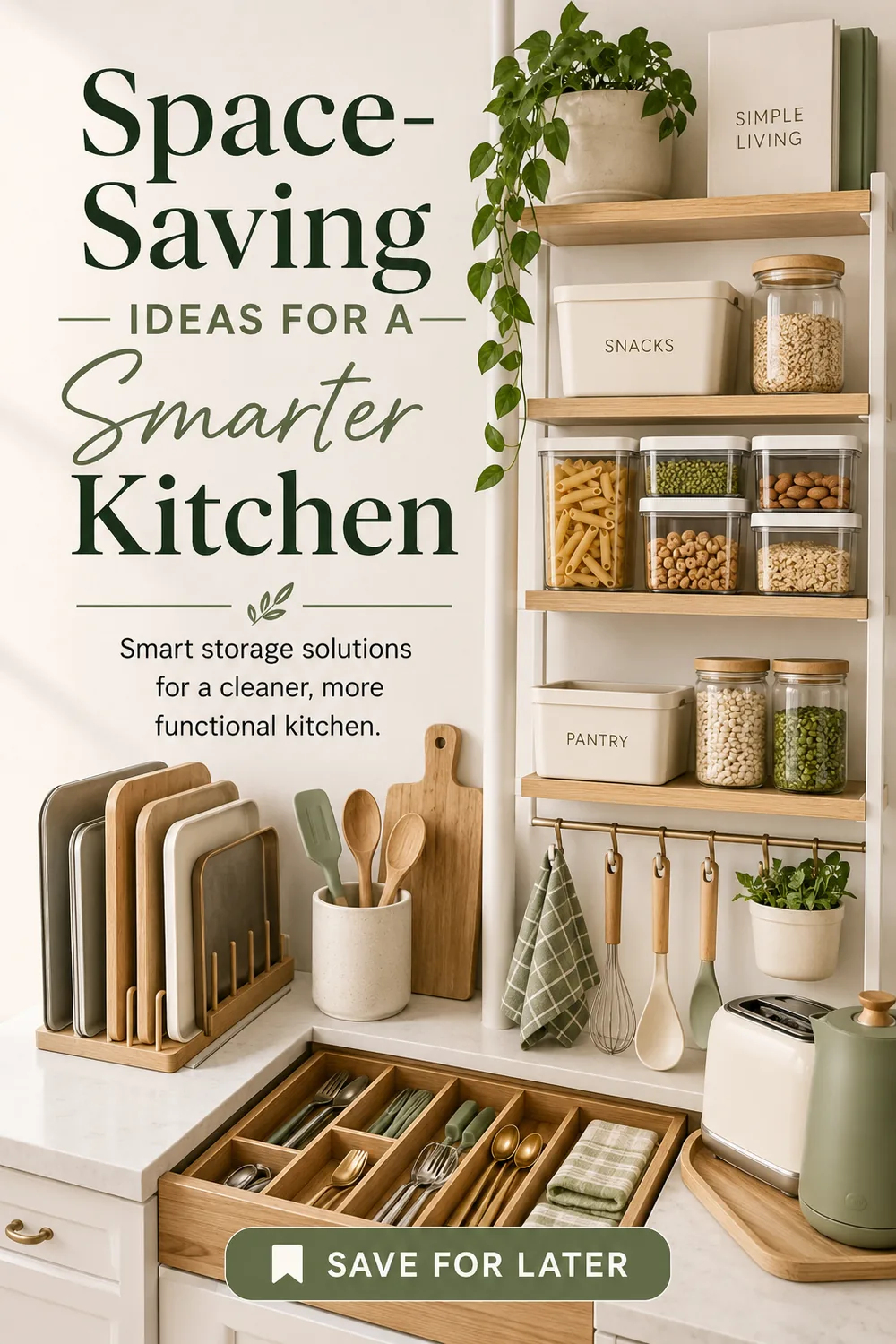
Keep only frequently used items on the counter. Store occasional appliances elsewhere and group the remaining items on a tray. Clear preparation space makes a kitchen feel larger and supports safer cooking.
Use cabinet height
Shelf risers and stackable containers turn tall cabinet gaps into useful storage. Place lighter items above heavier items and keep labels facing forward. Avoid unstable stacks that require removing several containers to reach one item.
Divide drawers by task
Organize drawers around activities such as cooking, baking or serving. Adjustable dividers prevent utensils from shifting and make it easier to see what is already owned. Place the most frequently used tools near the main work area.
Store boards and trays vertically
Cutting boards, baking sheets and lids are easier to access when stored upright in a rack. Vertical storage prevents awkward stacks and makes better use of narrow cabinet spaces.
Review quantities
Small kitchens benefit from intentional limits. Keep enough dishes and containers for normal use, but avoid excessive duplicates. When a category becomes difficult to store, review what is used most often before adding more.
Quick checklist
- Clear unnecessary countertop items
- Add stable shelf risers
- Divide drawers by activity
- Store boards and trays upright
- Limit unnecessary duplicates
A thoughtful next step
Choose one idea that addresses a real need in your current routine. Test it before adding more products or systems. The most useful solution is the one that remains easy to use after the initial motivation has passed.