
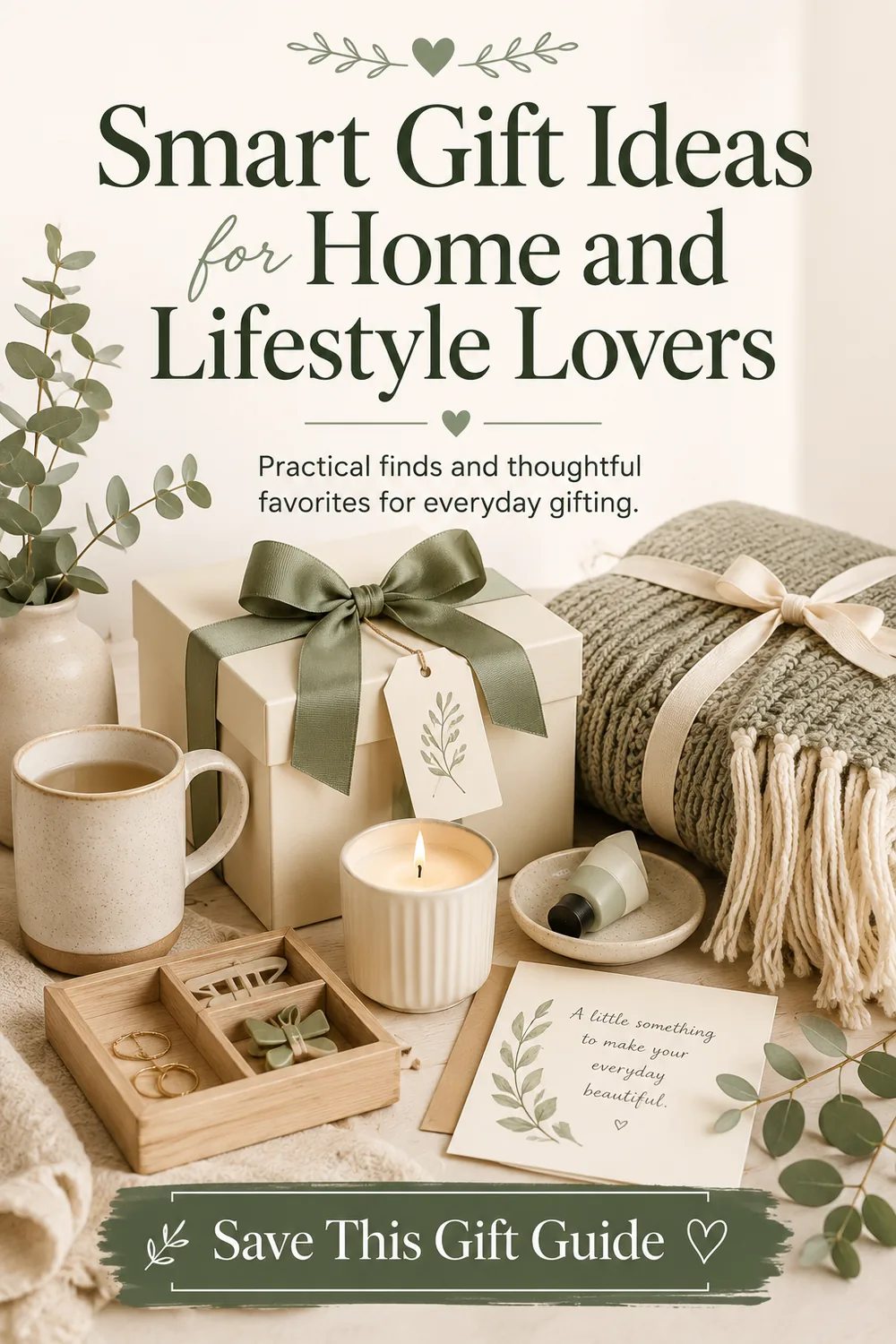
A thoughtful gift does not have to be complicated. It should reflect something about the recipient’s habits, interests or current stage of life. Practical gifts are most successful when they feel personal rather than generic.
Observe routines and preferences
Consider what the person enjoys at home, how they spend weekends and whether they prefer practical, decorative or experiential gifts. Small observations often produce better ideas than broad demographic categories.
Respect space and lifestyle
For someone with limited storage, choose compact or consumable options. For a frequent traveler, prioritize lightweight items. A gift should fit the recipient’s real environment rather than creating a new storage problem.
Create a useful theme
A small group of coordinated items can feel more thoughtful than one random product. Examples include a quiet evening set, a kitchen organization starter, a home office reset or a simple self-care bundle.
Avoid overly personal assumptions
Beauty, wellness and home products can involve strong preferences. Choose neutral, flexible options unless you know the person’s tastes, sensitivities and existing routine.
Add a clear, personal note
A short message explaining why the gift reminded you of the recipient adds meaning. Presentation does not need to be elaborate; a reusable box, simple ribbon and handwritten card can be enough.
Quick checklist
- Consider the recipient’s routines
- Respect their available space
- Build a coherent theme
- Avoid assumptions about personal preferences
- Include a brief personal note
A thoughtful next step
Choose one idea that addresses a real need in your current routine. Test it before adding more products or systems. The most useful solution is the one that remains easy to use after the initial motivation has passed.